


Redefining Online Education with a Digital Uplift

In Brief
Custom technology promotes student growth and saves millions of dollars
Managing the educational experience of over 30,000 students across an entire state is no easy feat. Facing mounting administrative burdens and barriers to insights with over 60 separate educational systems, one of the largest public virtual charter schools in the United States needed an integrated technology solution.
Resource Data established an integrations team, designed architecture, and built integrations to synchronize data between all the school’s systems. As their technology partner, we’ve automated processes, streamlined reporting, and built multiple, custom tools and applications. Our software solutions have saved the school millions of dollars and, importantly, allowed teachers to spend less time on admin tasks and more face time with students.
Key Takeaways
Quality, individualized learning experiences through innovative technology solutions
-
Comprehensive integration and automation reduces admin
Our partnership led to significant improvements in system integration and automation. Streamlined operations allow teachers to focus more on teaching and less on administrative tasks.
-
Enhanced digital ecosystem fosters better engagement
By revamping the school’s digital infrastructure, including the implementation of a sophisticated student-teacher matching tool and a centralized student scheduling system, the educational experience was elevated. The results: better engagement and personalized learning opportunities.
-
Innovative solutions save millions of dollars
The development of specific tools, such as automated grade submissions and a custom storefront for fund management, directly addressed the unique challenges faced by the charter school, saving time, resources, and millions of dollars.
-
Focus on future readiness ensures educational excellence
Forward-thinking initiatives like consolidating data into a single-source database, developing an engagement portal for families, and implementing artificial intelligence (AI) such as a registration documentation verification tool, will ensure continued educational excellence.

The Challenges
A labyrinth of fragmented systems
One of the largest public, virtual charter schools in the U.S. caters to about 30,000 students from pre-K to 12th grade statewide. The school focuses on personalized learning tailored to each student’s style, abilities, and interests. While online programs are the main mode of instruction, teachers also have face-to-face meetings with students, fostering long-term relationships.
Given its size and tailored approach, the school struggled with managing data across 60 different systems, hindering efficiency and causing delays in accessing vital information on everything from grades and attendance to payroll and asset management. Integration issues with PowerSchool, their primary student-information platform, led to manual data-entry woes and reporting delays for the school’s thousands of teachers and administrators. Addressing these challenges was crucial to the school’s growth and ensuring their continued delivery of a high-quality education.
The Solution
A partnership dedicated to student success
The school teamed up with Resource Data to streamline and automate manual tasks, allowing teachers more time for teaching. By enhancing the system architecture and integrations, we enabled seamless connections with PowerSchool and other vendor systems, significantly reducing manual processes.
The seamless integrations revolutionized the school’s operational efficiency. We empowered administrators and teachers to efficiently capture and leverage data. Reports that once took up to 12 hours can now be generated in minutes, enhancing decision-making, and enabling easier compliance with government reporting requirements.
Beyond integration, we transformed the school’s digital ecosystem to align with their educational approach. Implementing innovative tools like enhanced student-teacher matching, centralized student scheduling, and a student fund management solution, elevated student-educator engagement to new levels.
“The transformative changes in administrative efficiency have paved the way for richer interactions between our teachers and students.”
~ Product Owner & Business Analyst, EdTech Department

“Resource Data has been crucial in making sure we make significant changes across our district with technology. We have saved teachers countless hours of administrative seat time by making improvements to the way they do some of their tasks and that translates to teachers spending more time face to face with students. And that’s really the ultimate goal we have as a district.”
- Product Owner & Business Analyst, Charter School EdTech Department
Custom Software
Innovative tools enhancing education and administrative efficiency
-
Automated grade submissions reduced administrative workload
Grades Passback automates submitting grades for over 12 million assignments from curriculum systems into PowerSchool. On average, this tool saves teachers 15 hours per week.
-
Streamlined teacher-student matching solution for better student outcomes
Teacher matching tool replaces burdensome, manual processes. It automatically identifies the best-fit teachers for students based on needs like primary language, grade level, proximity, and more.
-
Custom storefront and fund management solution improved visibility and saved millions
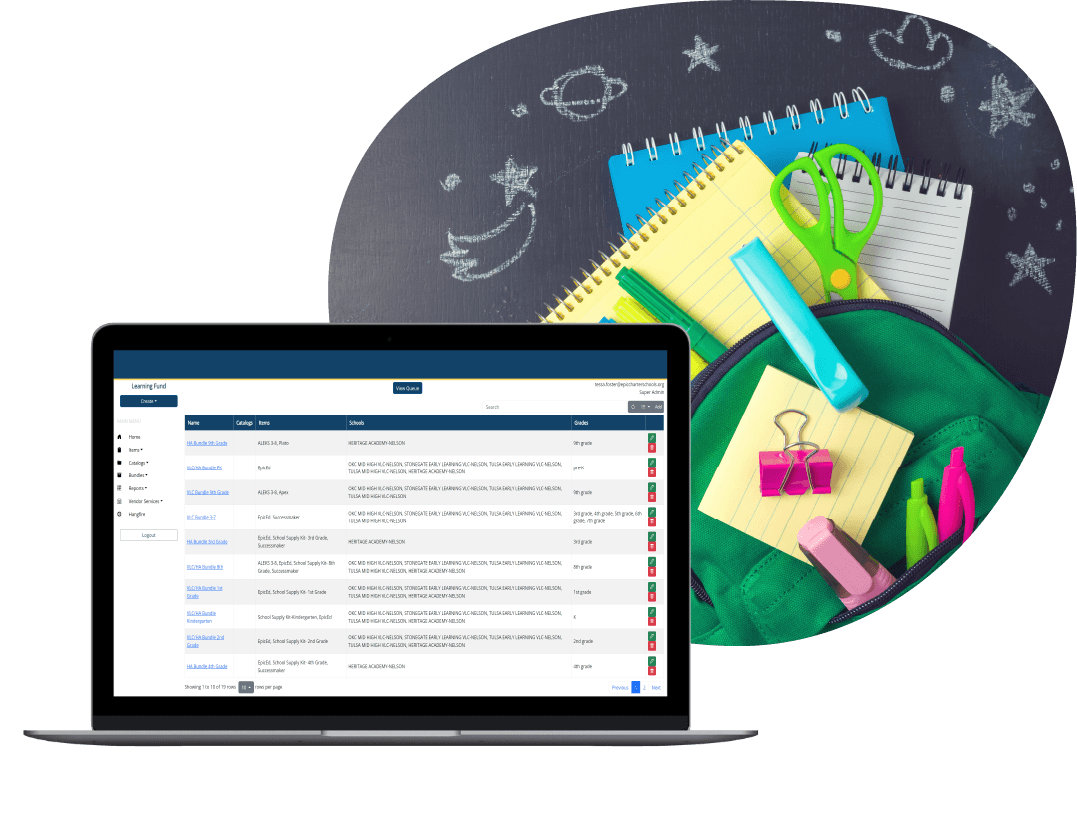
Learning Fund simplifies managing students’ state funding allotment. It replaces a vendor-managed system that required significant manual workarounds, saving the school over $3 million.
-
Robust student scheduling system improved meeting management
Centralized platform replaced multiple tools and integrates with PowerSchool for seamless schedule and site coordination across numerous locations.
-
Modern Reporting Architecture for faster data access and compliance
Previously it could take up to 12 hours to get data from multiple, interdependent systems. The new architecture enables event-based reporting for faster and more targeted data access and easier analysis of student performance, attendance, employee time tracking, federal reporting and more.
-
Automated instructional activity tracking ensured reporting compliance
Semi-automated attendance reporting using completed instructional assignments, means the school is doing more than simply taking roll call. They easily track engagement—over 13 million activities tracked in the first year— while ensuring compliance with state truancy requirements.
The Results
Less time on admin, more time for students
The school is committed to empowering students with a modern, individualized online learning experience, backed by in-person support. To achieve this, we collaborated on a multifaceted strategy. Leveraging advanced technologies, rapid prototyping, and stakeholder feedback, we delivered innovative solutions that transformed education administration.
With our partnership, the school has been able to achieve significant cost savings, streamline operations, and most importantly, enhance the educational experience for their families.

What's Next
Driving future innovations
Our forward-thinking solutions not only address current needs but also prepare the school for tomorrow’s educational challenges. Through ongoing collaboration, we are focused on scalability and future growth.
A key initiative involves consolidating data from all the school’s systems into a single-source, shared database for standardized and accurate reporting. Additionally, we are developing a custom family engagement portal and implementing cutting-edge AI tools like Robotic Process Automation to uphold The school’s commitment to educational excellence.




Case Study FAQ
A large virtual charter school can reduce administrative costs and improve students’ experience by integrating fragmented systems, automating repetitive work, and building custom tools around the school’s instructional model. When teachers and administrators must move data manually across dozens of systems, operational cost rises and staff have less time for student support.
In Resource Data’s case study, one of the largest public virtual charter schools in the United States served about 30,000 pre-K through 12th grade students statewide while managing data across more than 60 systems. Resource Data established an integrations team, designed architecture, and built integrations and custom applications to synchronize data between the school’s systems. The partnership automated processes; streamlined reporting; and built tools for grade submissions, scheduling, teacher-student matching, and fund management.
These changes led to major cost savings and better use of staff time. The case study states that Resource Data’s software solutions saved the school millions of dollars and helped teachers spend less time on administrative tasks and more time with students.
Schools can get ROI from custom software when it removes high volume manual work, reduces vendor dependency, speeds reporting, and gives staff more time for instruction and student support. The strongest return comes from solving the workflows that are both expensive and central to daily operations.
Resource Data’s case study gives a few examples. Grades Passback automated grade submission for more than 12 million assignments from curriculum systems into PowerSchool and saved teachers an average of 15 hours per week. The Learning Fund solution replaced a vendor managed system with significant manual workarounds and saved the school more than $3 million. Reporting that once took up to 12 hours could be generated in minutes after Resource Data improved the reporting architecture.
For large online schools, those gain compound because even small workflow improvements can affect thousands of teachers, administrators, families, and students across the statewide learning environment.
System integration matters for personalized online learning at scale because individualized education depends on timely, accurate information about grades, attendance, scheduling, student needs, teacher assignments, funding, and engagement. If that information is trapped in separate systems, staff cannot coordinate support easily or make informed decisions for each student.
In Resource Data’s case study, a virtual charter school used more than 60 separate educational systems and PowerSchool as its primary student information platform. Integration issues created manual data entry work and reporting delays for thousands of teachers and administrators. Resource Data built integrations that synchronized data across the school’s ecosystem and supported custom tools such as teacher student matching, centralized scheduling, automated grade submissions, and fund management.
By reducing system fragmentation, the school could capture and use data more efficiently. This helped teachers and administrators focus on student engagement rather than wrestling with disconnected tools.
Schools can give teachers more time with students by automating recurring administrative workflows that do not require teacher judgment, especially grade entry, attendance tracking, scheduling coordination, and reporting preparation. The goal is not to remove teachers’ involvement from instruction; it is to remove repetitive system work that consumes time better spent with students.
Resource Data’s case study shows this clearly through the Grades Passback tool. The system automates submitting grades for more than 12 million assignments from curriculum systems into PowerSchool. On average, the tool saves teachers 15 hours per week. The case study also notes that Resource Data’s broader partnership helped the school automate processes and streamline reporting, so teachers could spend less time on administrative work and more time with students.
For a statewide virtual charter school serving about 30,000 students, automation can return thousands of hours to teaching, student support, family communication, and relationship building.
A virtual charter school can improve teacher-student matching by replacing manual assignment processes with a tool that considers student needs, teacher fit, and practical constraints in a consistent way. Matching matters because students in personalized learning environments may need support based on language, grade level, geography, schedule, and learning context.
In Resource Data’s case study, the school implemented a teacher matching tool that replaced burdensome manual processes. The tool automatically identifies best fit teachers for students based on needs such as primary language, grade level, proximity, and more. This was part of a broader digital ecosystem that also included centralized scheduling and integrations with PowerSchool and other vendor systems.
The operational impact is better engagement and more personalized learning opportunities. Instead of spending staff time manually coordinating assignments, the school can make matching more consistent, reduce administrative burden, and support stronger relationships between students and educators.
Attendance and instructional activity tracking can support compliance in online schools by documenting meaningful student engagement rather than relying only on traditional roll call models. Online and hybrid learning environments need evidence that students are participating in instruction, completing activities, and receiving appropriate support.
Resource Data’s case study describes a semiautomated attendance reporting solution that uses completed instructional assignments to track engagement. The system tracked more than 13 million activities in the first year and helped the school comply with state truancy requirements. The case study notes that this approach means the school is doing more than taking roll call.
With activity based reporting, administrators can demonstrate engagement, identify patterns, and support timely interventions more easily while reducing the manual burden on teachers and staff.
Centralized scheduling can improve meeting management by replacing multiple disconnected tools with one platform that coordinates schedules, locations, and student support activities. For a statewide virtual school that also provides face to face meetings, scheduling is operationally complex because staff must coordinate across students, teachers, sites, and systems.
In Resource Data’s case study, the school implemented a robust student scheduling system that replaced multiple tools and integrated with PowerSchool. The centralized platform supported schedule and site coordination across numerous locations. This helped the school manage student meetings more effectively while aligning with its personalized online learning model.
The results are less coordination of friction and better service delivery for families and students. A centralized scheduling workflow reduces duplicated effort, makes appointment information easier to manage, and helps educators maintain the in person support that strengthens a virtual learning program.
Integrating PowerSchool with dozens of education systems requires a deliberate architecture and a dedicated integrations approach. It also takes workflows that synchronize student, instructional, administrative, and reporting data reliably. In large education environments, a platform like PowerSchool often sits at the center of operations, but it still needs clean data exchange with curriculum systems, scheduling tools, attendance processes, payroll, asset management, and reporting systems.
Resource Data’s case study describes a school with more than 60 separate educational systems and PowerSchool as its primary student information platform. Integration issues with PowerSchool created manual data entry work and reporting delays. Resource Data established an integrations team, designed architecture, and built integrations to synchronize data between the school’s systems. This reduced manual processes and resulted in more efficient reporting and operations.
The technical and operational impact is a more reliable digital ecosystem. Better PowerSchool integration reduces duplicate entry, improves data availability, and gives teachers and administrators faster access to the information they need to support students.
Modern reporting architecture can reduce delays by making data from multiple systems available faster, more consistently, and in formats that support targeted analysis. When reports depend on many interdependent systems and manual data pulls, even routine questions can take hours to answer.
In Resource Data’s case study, reports that once took up to 12 hours could be generated in minutes after the school’s architecture and integrations were improved. The modern reporting architecture produced event based reporting for faster and more targeted data access and easier analysis of student performance, attendance, employee time tracking, federal reporting, and other operational areas.
Administrators can respond to student performance patterns, operational needs, and government reporting requirements without waiting through long data gathering cycles. This has improved school management and student support.
A single source database can prepare a large online school for future growth by standardizing data across systems and reducing the inconsistencies that make reporting, automation, and analytics harder at scale. As schools add tools, programs, and student services, fragmented data becomes a barrier to reliable insights and future innovation.
In Resource Data’s case study, a key next initiative is consolidating data from all the school’s systems into a single source, shared database for standardized and accurate reporting. This future ready effort builds on Resource Data’s broader work integrating systems, automating workflows, and developing custom tools such as a family engagement portal and AI enabled process automation.
A single source data foundation can support more accurate reporting, cleaner integrations, future AI or robotic process automation, and stronger visibility into student engagement and operational performance as the school continues to grow.