




Remodeling Municipal Insights with Cloud-Powered Data

In Brief
Empowering city managers with easy access to data
Like many legacy reporting solutions, the City of Boise’s were a mix of multiple systems implemented by different people over time. This made obtaining accurate and reliable data reports difficult, heavily burdening the City’s Data Engineering Team.
Leveraging Azure Synapse Analytics and PowerBI, Resource Data redesigned the City’s data model, constructed a robust data pipeline, and built visually intuitive dashboards and reports. The single, centralized data source and cloud-based system enables easier self-service, improves data consistency, and drives data-driven decision-making.
Key Takeaways
New data platform creates comprehensive view
-
Centralized data model and source for a holistic view
Joining disparate datasets into a single, documented repository streamlined operations. This integration not only reduced silos but also facilitated informed decision-making. Unifying ranged-based and transactional data, created a holistic view for strategic planning and budget allocation.
-
Cloud powered, reporting solution for the future
The cloud-based solution laid the foundation for enhanced scalability, security, and performance. It is ready to migrate to a distributed compute environment with demand increases; easy to deploy to other departments; and minimizes the impact of other city-wide technology projects.
-
Data granularity for deeper, actionable insights
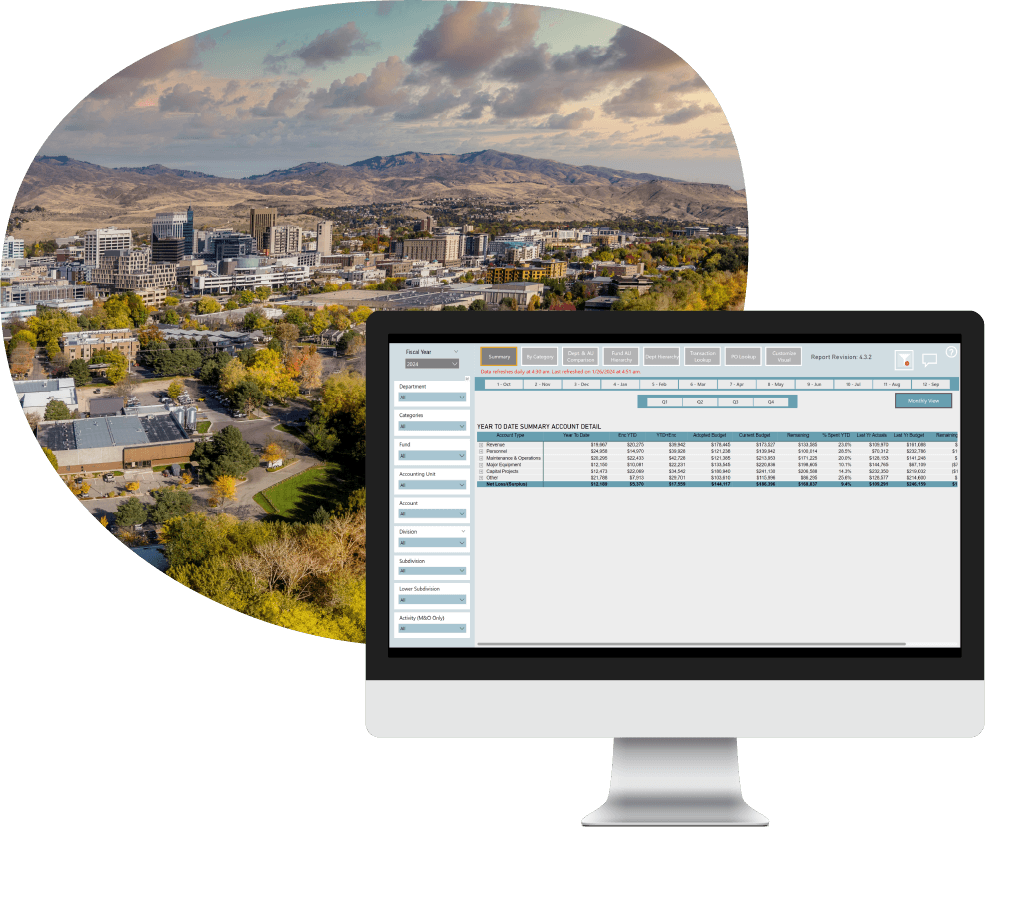
The project marked a paradigm shift from summary-based to transactional-level insights. By redesigning finance reports with drill-down capabilities across accounts, departments, spending, and budgeting, the city unlocked previously unattainable levels of data granularity.
-
Self-Service capabilities for reduced support burden
Cloud access and interactive tools enabled better self-service. Custom reports and dashboards with drill down capabilities empowered department. And the redesigned and enhanced data model ensured consistent and accurate data, for confident, data-driven decision making.

The Challenges
Technical debt burdens IT teams and decision-makers
The City’s legacy data platform was a mix of multiple, minimally documented systems, increasing the IT administration and user support burden on the City’s data engineering team.
The complex web of data pipelines from legacy systems also delivered non-uniform results to existing reports, sowing distrust in the data. With city-wide initiatives to make more data-driven decisions and migrate technologies to the cloud, their data platform and data model needed a complete overhaul.
The Solution
A new, robust data model and single, integrated data platform for greater insights
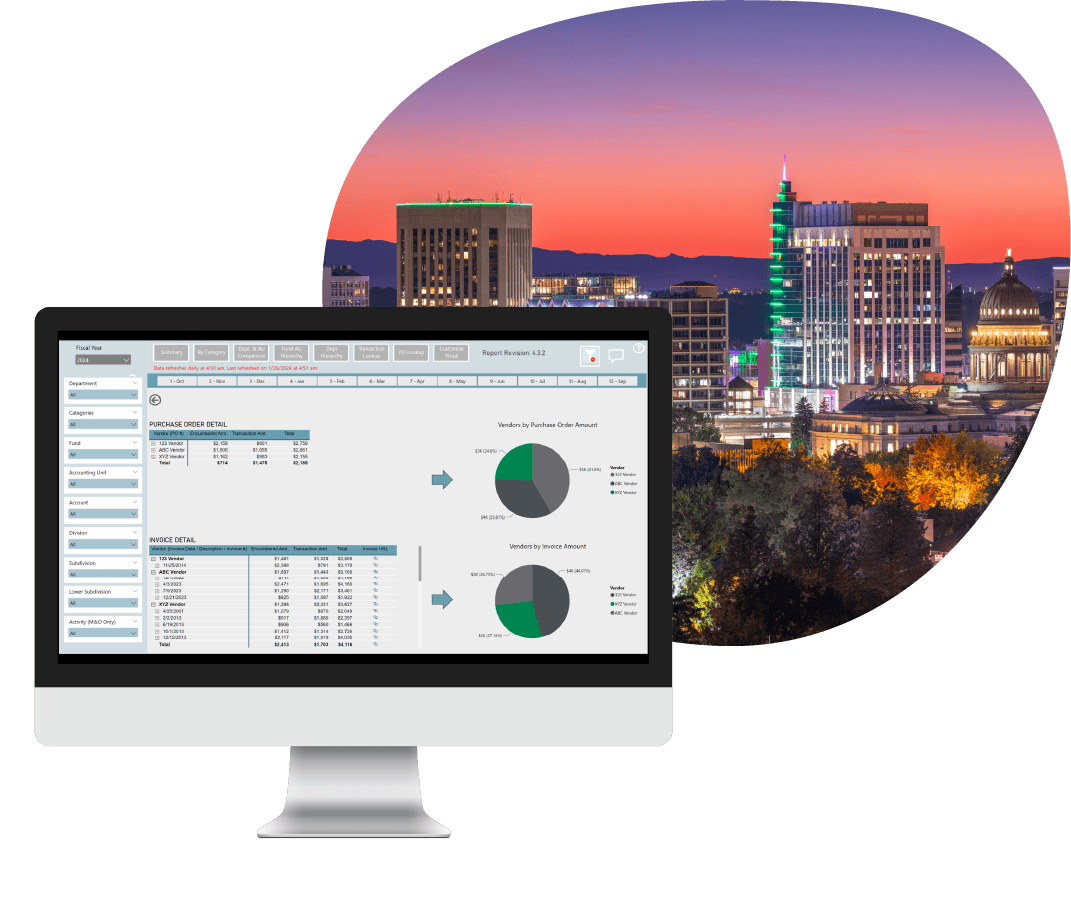
Our strategic collaboration with the City of Boise’s Data Engineering team resulted in a complete overhaul of the existing data model and fragmented data platforms. We assessed existing systems, defined stakeholder needs, restructured the data warehouse, and built resilient data pipelines for efficient data extraction from varied sources, including the City’s on-premise ERP and third party, cloud-based budget transparency tools.
Then we built a centralized data platform, integrating data with Azure Synapse Analytics (formerly Azure SQL Data Warehouse) for a modern, scalable solution. We migrated to Azure Synapse Analytics with minimal disruption to ongoing operations. The project culminated in deploying custom, intuitive PowerBI dashboards to empower managers to access—and act on—accurate data.

Resource Data’s Data Engineer, together with technical city staff, outlined an approach that eliminated the risks we had in the older reporting solutions while also providing new capabilities that many of our employees didn’t think possible.
Greg Hanmer, Sr. Manager, City of Boise Data Services
Features
Powerful insights from integrated, protected, and accurate data
-
Azure Synapse Analytics for a simplified hybrid data integration
Robust data pipelines allow for a sophisticated and efficient Extract, Transform, Load (ETL) process from diverse and disparate data sources, on premise and in the cloud.
-
PowerBI for for powerful, visually enabled insights
Visually intuitive dashboards enable detailed insights across various crucial data points for decision makers.
-
Precision-focused security to safeguard data
Role-Based Access Control (RBAC) and column-level security meticulously specify access privileges, roles, and permissions, ensuring only authorized personnel access designated data segments.
-
Intuitive dashboards and interactive tools for deeper analysis
Visually intuitive dashboards and reports and interactive tools with drill-down capabilities provide comprehensive insights across accounts, departments, spending metrics, and other vital data points.


“This solution allows us to access data anywhere—on or off the city’s network—and provides decision makers with unfettered access to the data they need to inform daily decision making as it pertains to our finance and people data.”
- Greg Hanmer, Sr. Manager, City of Boise Data Services
Results
Integrated datasets and tailored insights
The integrated data platform transformed the city’s data-driven decision making by shifting from canned, summary-based reports to customizable, in-depth insights. Initially adopted by the Departments of Finance and Administration, it quickly expanded to HR and the CIO due to its clear benefits.
The new self-service model and system delivered accurate, trustworthy reports in hours instead of months, easing the burden on the data engineering team. It streamlined operations, reduced siloed information, and minimized the need for multiple reports by providing precise, detailed insights.

What's Next
Creating a citywide data-driven culture
This project marks the beginning of a city-wide transition to a data-driven culture. By implementing a new data model and platform, the city has gained previously unattainable levels of data granularity, equipping decision-makers with deeper, more actionable insights.
The project’s success has led to plans to improve performance and increase bandwidth through a distributed computing environment. It has also sparked interest across various city departments. Thanks to its scalable design, the new data model and platform are ready for citywide deployment.




Case Study FAQ
A centralized data platform can improve municipal decision making by giving leaders one trusted source for accurate, consistent, and timely information. When finance, HR, administration, and other departments rely on fragmented reports from different systems, decision makers may lose confidence in the data or wait too long for answers.
In Resource Data’s case study, the city’s legacy reporting environment was a mix of minimally documented systems built over time. Resource Data redesigned the data model, built resilient pipelines, and integrated data into Azure Synapse Analytics so city managers could access consistent information through Power BI dashboards and reports.
Now, the city can make decisions faster and with more confidence. A single, centralized data source helps reduce reporting silos, supports strategic planning and budget allocation, and gives managers a clearer view of City operations.
Legacy reporting systems create problems when data pipelines, reports, and business logic have been built by different people over time with limited documentation. The result is often inconsistent outputs, higher support burden, and distrust in the reports that leaders need for daily decisions.
Resource Data’s case study describes a legacy data platform made up of multiple systems that delivered non uniform results to existing reports. This created technical debt for the City’s data engineering team and made it difficult for users to get accurate and reliable reporting.
A modern reporting environment helps data teams spend less time supporting brittle systems and more time empowering City departments with accurate, self-service insights.
Cloud based reporting can reduce report delivery time by combining a modern data warehouse, automated pipelines, governed data access, and reusable dashboards. Instead of rebuilding custom reports from disconnected sources, teams can use a documented data model and interactive tools to answer recurring business questions faster.
In this case study, the new self-service model delivered accurate, trustworthy reports in hours instead of months. Resource Data used Azure Synapse Analytics and Power BI to support custom dashboards, drill down reporting, and access to data on or off the city network.
Now, City managers can get reliable information when they need it. Plus, the data engineering team faces fewer one-off reporting requests and less manual support work.
Self service reporting means city managers and department users can explore approved data through dashboards and reports without waiting for the data team to build every view manually. It gives non-technical decision makers access to the information they need while preserving a governed, consistent data foundation.
In Resource Data’s case study, custom Power BI dashboards and interactive reports helped managers access accurate data across finance, HR, administration, and other City functions. The platform included drill down capabilities across accounts, departments, spending, and budgeting so users could explore details beneath summary level reports.
Departments can answer more questions independently, while the data engineering team can focus on improving the platform rather than servicing every reporting request.
Data granularity is important because summary level reports can hide the details leaders need for budgeting, planning, and operational decisions. Transaction level or drill down data lets managers understand what is happening by account, department, spending category, or other relevant dimensions.
Resource Data’s City of Boise case study describes a shift from canned, summary based reports to customizable, in-depth insights. By redesigning finance reports with drill down capabilities across accounts, departments, spending, and budgeting, the city gained levels of data granularity that had previously been unattainable.
The business impact is better budget allocation and strategic planning. Leaders can move beyond broad summaries and use precise data to understand trends, explain spending, and make more defensible decisions.
A better data model reduces reporting silos by defining how data from different systems connects, how metrics should be interpreted, and where users should go for trusted answers. Without that shared model, each department may rely on separate reports that do not align with one another.
In this case study, Resource Data worked with the City’s data engineering Team to restructure the data warehouse and integrate data from varied sources, including the on premises ERP and third party cloud based budget transparency tools. The result was a centralized, documented repository that joined disparate datasets into a more holistic view.
This resulted in greater consistency across the organization. Departments can work from the same trusted foundation, which reduces confusion, duplicate reporting, and time spent reconciling conflicting numbers.
Dashboards make city data more useful by presenting key information visually, interactively, and in context for people making decisions. Instead of reading static reports, users can drill into data points, compare departments or accounts, and investigate the details behind a metric.
Resource Data’s case study shows how Power BI dashboards and reports gave decision makers visually enabled insights across finance and other data. The city’s senior data services manager noted that the solution allowed access to data anywhere, on or off the city network, and gave decision makers the data they needed daily.
Benefits include better operational responsiveness. Managers can identify issues, answer questions, and act on current information without waiting through a long report production cycle.
Azure Synapse Analytics is useful for municipal data modernization because it can centralize data from multiple systems into a scalable, cloud based analytics platform. For cities moving away from fragmented legacy reporting, it supports stronger integration, performance, and future scalability.
In Resource Data’s City of Boise case study, Resource Data migrated from the city’s data platform to Azure Synapse Analytics (formerly Azure SQL Data Warehouse) with minimal disruption to ongoing operations. The platform integrated on premises ERP data and third party, cloud based budget transparency data into a modern reporting foundation.
The city gained a platform that supports current reporting needs while preparing for future demand, broader deployment, and eventual distributed compute capabilities as usage grows.
Data pipelines improve reporting accuracy and reliability by automating how data is extracted, transformed, loaded (ETL), and prepared for analysis. Well designed pipelines reduce manual handling, document data movement, and help make sure reports are built from consistent sources.
Resource Data’s City of Boise case study describes robust data pipelines that support efficient ETL from diverse and disparate sources, including systems on premises and in the cloud. These pipelines helped replace the City’s complex legacy web of data flows that had produced non-uniform reporting results.
When data moves through repeatable pipelines and a redesigned data model, users can rely on the outputs more confidently. Plus, the data engineering team can manage the environment more efficiently.
Security is essential in a cloud based municipal reporting platform because different users need different levels of access to finance, HR, and operational data. A modern data system should make information easier to use without exposing sensitive fields to unauthorized people.
In this case study, the platform used role based access control and column level security to specify access privileges, roles, and permissions. This helped ensure that only authorized personnel could access designated data segments while still expanding self-service reporting across departments.
The result is safer data access at scale. City users can get the information they are authorized to use, and IT and data teams maintain governance controls as the platform expands.
A cloud data platform can support citywide expansion when it is built with a reusable data model, scalable architecture, governed access, and dashboards that can be adapted across departments. A successful first rollout should create a foundation that other departments can build on rather than a one-off reporting tool.
In this case study, the platform was adopted by the finance and administration departments initially. After that, it was expanded to HR and the CIO because of its clear benefits. The case study also describes plans to improve performance and increase bandwidth through a distributed computing environment, with the platform ready for citywide deployment.
Now, the City of Boise can extend trusted reporting to more departments without rebuilding the data environment from scratch each time. This supports a citywide data driven culture.