



Replanting the Process: New Online Tree Ordering System for State Nursery
In Brief
Making Tree Digital Sales Simple and Accessible
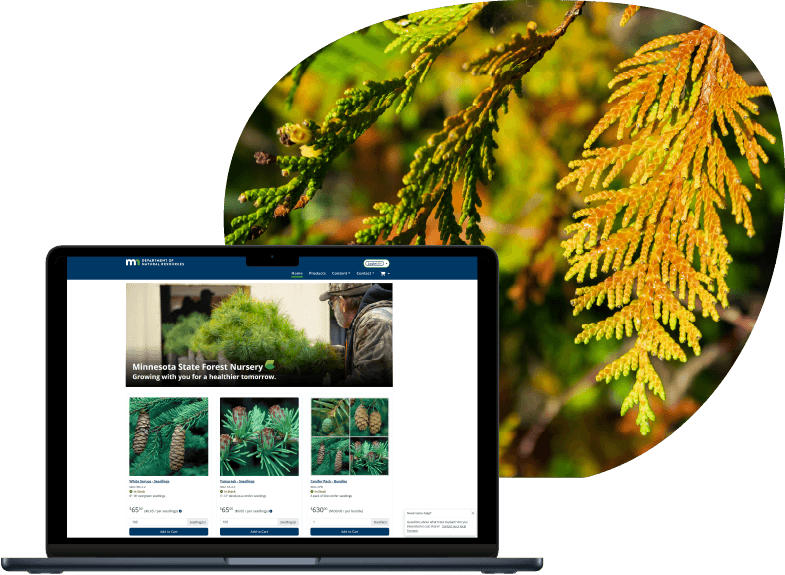
The Minnesota Department of Natural Resources (DNR) needed a faster, more reliable way to manage tree seedling sales for its State Forest Nursery. Paper forms, mailed checks, and manual inventory tracking slowed operations and made it difficult to keep up with demand.
Together, Resource Data and the DNR created a unified online system for ordering, payments, inventory, and shipping. The new process saves the Nursery time and gives customers an easier way to buy tree seedlings.
Key Takeaways
Technology Rooted in Results
-
Unified Platform for Simplified Operations
Ordering, payments, and inventory tracking now happen in one place, replacing paper forms and manual steps with an efficient, integrated system.
-
Online Access for Faster, Easier Ordering
Customers can browse, order, and pay for seedlings online with immediate confirmation, saving time, and reducing delays for both staff and buyers.
-
Automated Processes for Greater Accuracy
Automated pricing, tax updates, and real-time inventory tracking reduce errors and give staff better insight for planning production.
-
Scalable Solution for Future Growth
Built with future expansion in mind, the system can support new nurseries, added features, and higher order volumes as demand grows.

Our Client
Minnesota Department of Natural Resources
The Minnesota Department of Natural Resources (DNR) manages the state’s lands, waters, forests, and wildlife to ensure long-term environmental health. Within its Division of Forestry, the State Forest Nursery, located near Akeley, Minnesota, plays a vital role in this mission.
Each year, the nursery grows and sells more than three million tree seedlings to landowners, conservation districts, and foresters across the state. Its work supports reforestation and habitat restoration throughout Minnesota.
Challenges
Manual Processes Slowing a Growing Mission
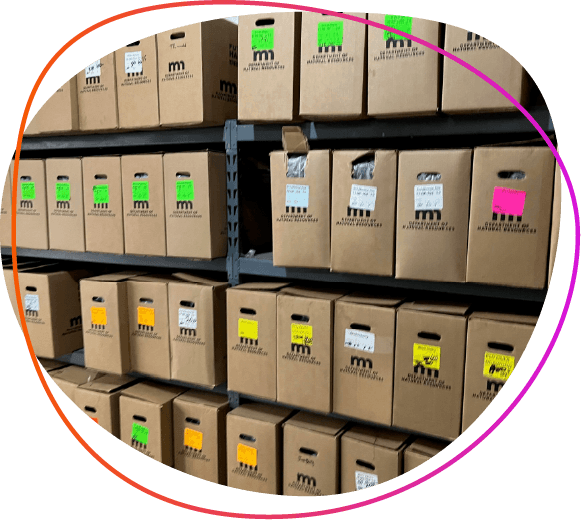
For years, the State Forest Nursery managed seedling sales through paper forms, mailed checks, and manual inventory logs. Each order required staff to enter details by hand, track stock on spreadsheets, and process payments manually. The system was slow, error-prone, and difficult to manage during peak ordering seasons.
State regulations added more complexity. Different customer groups had separate sales windows, product availability, pricing tiers, and payment rules that staff had to calculate by hand. Earlier attempts to digitize the process never worked as intended, leaving the nursery stuck with outdated tools while demand for seedlings continued to rise.
The DNR needed a system that could bring every part of the process together while giving staff the tools to manage growth efficiently.
The Solution
A Unified Platform Connecting Every Part
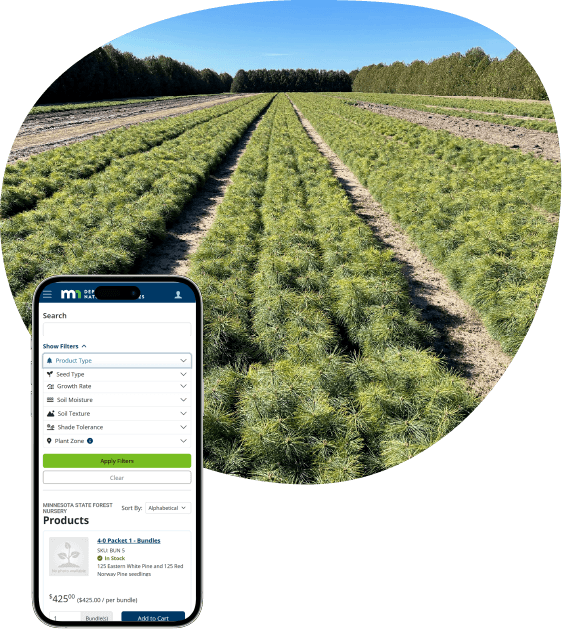
Resource Data and the DNR’s internal development team built a custom web-based system designed for the nursery’s day-to-day needs. The new platform handles ordering, order tracking, payment processing, inventory management and shipping, all in one place, replacing the patchwork of manual steps used before.
Developed in Ruby on Rails, the system integrates with Login.MN, Minnesota’s statewide secure sign-in service, and includes reporting and export functions that let staff view and share order data easily. It was built so the DNR could maintain and expand it internally, giving the agency long-term control over its operations and future enhancements.
Features
Digital Ecosystem that Simplifies, Connects, and Scales
-
Integrated Ordering and Payments for Easier Transactions
A single interface combines order entry, payments, and customer records. Staff handle mailed or online payments, and customers complete secure purchases directly in the system.
-
Automated Pricing and Tax Rules for Error-Free Calculations
Built-in logic applies tiered pricing based on product quantity and updates tax rates automatically each quarter, eliminating manual spreadsheets and ensuring accurate transactions.
-
Real-Time Inventory Tracking for Full Operational Visibility
Live data gives staff an accurate view of seedling availability while customers can log in to view order and shipment status.
-
Multi-User Access for Diverse Customer Needs
Supports nine customer types, from state foresters to private landowners, each with unique product availability and order windows managed through role-based access.
-
Centralized Delivery Management for Clear Coordination
Customers select pickup, drop-site delivery, or direct shipping. Staff use built-in tracking to manage orders across multiple locations.
-
User-Friendly Product Search for Easy Browsing
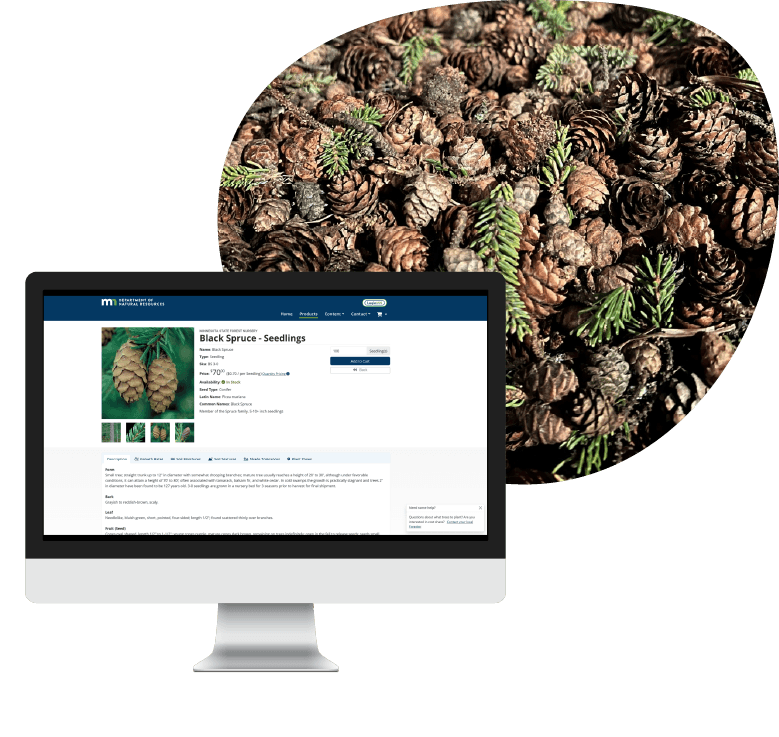
Customers can search by keyword or use filters for soil type, moisture, and climate zone to quickly find the right seedlings.
The real goal is helping Minnesota plant more trees, and now the DNR has the tools to do that.
- Eric Martinez, Sr. Business Analyst, Resource Data
Results
Strengthening Service for People and Forests
The new online system quickly replaced the nursery’s paper-based process and became the single platform for all seedling orders. Staff now track sales, payments, and inventory in one place, giving them accurate information to plan production, manage demand, and prepare for future nursery expansion.
Customers now have real-time access to seedling availability and can complete the ordering process online. By logging into the system, they can view order details and status at any time. With every transaction handled digitally, the nursery spends less time on manual work and more time on its mission, growing and distributing healthy trees across Minnesota.
What's Next
Planting the Seeds for Future Growth
The system was built to evolve as the State Forest Nursery expands its operations. It can integrate new features, reporting tools, and additional nursery sites as statewide production increases, helping the DNR manage the growing volume of orders and coordination needed to reach Minnesota’s goal of planting 10 million seedlings each year by 2030. With this digital foundation in place, the agency can continue scaling reforestation efforts and strengthening conservation programs across the state.



Case Study FAQ
A state nursery can modernize seedling sales by moving ordering, payments, inventory, customer records, and shipping into one online system. The goal is not just to replace paper forms with a website. It’s also important to remove the manual handoffs that slow staff down and make it harder for customers to buy seedlings.
In Resource Data’s case study, the Minnesota Department of Natural Resource’s State Forest Nursery was still managing seedling sales through paper order forms, mailed checks, manual payment processing, spreadsheets, and hand-entered inventory updates. That process was slow during peak ordering seasons. It also created more chances for errors because staff had to calculate details by hand and keep multiple records aligned.
Resource Data and the DNR’s internal development team built a custom web-based ordering system that brought the process together. Customers can browse seedlings, place orders, pay online, and check order status. Staff can manage orders, payments, inventory, shipping, exports, and reporting from one platform.
The results include faster service and better use of staff time. The nursery spends less time processing paperwork and more energy supporting its mission: growing and distributing healthy trees across Minnesota. This case study shows how custom software development can turn a paper-heavy public-sector process into a scalable digital operation.
The business value is better accuracy, faster order processing, clearer inventory visibility, and more capacity to handle demand without adding the same amount of manual work. For a state nursery, that value supports customer service and the larger conservation mission.
In the Resource Data case study, the Minnesota DNR State Forest Nursery sells more than three million tree seedlings each year to landowners, conservation districts, and foresters across the state. Before the new system, staff had to manage orders through paper forms, mailed checks, spreadsheets, and manual inventory logs. That made it difficult to keep up during busy seasons and harder to plan production confidently.
The new platform became the single system for seedling orders. It supports ordering, payments, order tracking, inventory management, shipping, reporting, and exports. Customers get real-time access to seedling availability and can complete the ordering process online. Staff get a more accurate view of sales, payments, and inventory.
Cost avoidance and scalability are some of the operational impacts. The nursery can process orders with fewer manual steps, reduce avoidable errors, and plan future production with better information. This example demonstrates how workflow modernization can support public service outcomes even when the case study does not report a specific dollar ROI.
An online nursery ordering system helps a public agency scale by reducing the amount of manual work tied to each order. If order volume grows but every sale still depends on paper forms, manual calculations, mailed checks, and spreadsheet updates, staff capacity becomes the bottleneck. A unified system lets more of the routine work happen digitally.
Resource Data’s case study is tied to a larger statewide goal. The Minnesota DNR needs the State Forest Nursery to support growing seedling demand as Minnesota works toward planting 10 million seedlings each year by 2030. The old process didn’t allow for that kind of growth. It required too many manual steps and gave staff limited real-time visibility into demand and inventory.
The new system gives the DNR a digital foundation for expansion. It can support new features, reporting tools, additional nursery sites, and higher order volumes as statewide production increases. Staff can manage sales, payments, inventory, and shipping in one place instead of stitching the process together manually.
One of the business impacts is scalability without proportional staff burden. The nursery can assist more customers and more complex coordination while keeping operations manageable. This case study shows how custom public-sector software can support long-term conservation goals, and not just short-term transaction processing.
Paper forms and spreadsheets create operational problems because they split one customer transaction across too many manual steps. Staff have to receive the order, enter details by hand, calculate pricing, process payment, update inventory, coordinate delivery, and answer customer status questions. Each step creates delays and room for error.
In Resource Data’s case study, the Minnesota DNR State Forest Nursery faced those exact problems. Orders came through paper forms. Payments arrived through mailed checks. Inventory was tracked manually. Staff also had to manage different customer groups, sales windows, product availability, pricing tiers, and payment rules. During peak ordering seasons, that process became slow, error-prone, and difficult to manage.
The new online system reduced those problems by centralizing ordering, payments, inventory, customer records, shipping, reporting, and exports. Customers can see seedling availability and order status online. Staff can work from live operational data instead of reconciling separate records.
In terms of operational benefits, less work is duplicated, and fewer preventable mistakes happen. Now, staff don’t have to rely on disconnected spreadsheets and manual calculations to keep the nursery running. This example shows why workflow modernization matters most when a process has high volume, seasonal demand, and many rule-based exceptions.
Online ordering improves the customer experience by making seedlings easier to find, order, pay for, and track. Customers no longer rely on paper forms or wait for manual confirmation. They can use the system to browse products, check availability, complete purchases, and view order details when they need them.
The Minnesota DNR State Forest Nursery serves landowners, conservation districts, foresters, and other customer groups across the state. Those buyers may have different needs, order timing, and product eligibility. The new system supports customer login, online payment, product search, real-time inventory access, and order status visibility.
Product search is especially important. Customers can search by keyword or filter seedlings by soil type, moisture, and climate zone. That makes the ordering process more useful than a static product list. It helps buyers find seedlings that fit their planting conditions.
This led to faster service and fewer support gaps. Customers can answer basic questions on their own. Staff spend less time manually confirming order details. Resource Data’s case study shows how a public agency can improve service quality while also reducing the administrative load behind each transaction.
A nursery ordering system can handle complex rules by building them directly into the ordering workflow. Instead of asking staff to remember and calculate every customer-specific rule, the system can apply role-based access, product availability, pricing, taxes, order windows, and payment rules automatically.
That was one of the most important issues in Resource Data’s case study. The Minnesota DNR State Forest Nursery did not have one simple ordering path for every buyer. State regulations created different requirements for different customer groups. The case study notes that the new system supports nine customer types, including state foresters and private landowners, each with unique product availability and order windows.
Resource Data’s solution built that complexity into the platform. The system applies tiered pricing based on product quantity and updates tax rates automatically each quarter. It also supports mailed or online payments, depending on the transaction need.
Now, staff do not have to calculate every exception by hand. Customers see the products and rules that apply to them. This case study shows how custom software can preserve public-sector business rules and make the process easier for staff and customers.
A public agency should choose a custom ordering system when the process is not a simple retail transaction. If the workflow includes eligibility rules, customer types, seasonal order windows, tax rules, shipment coordination, reporting needs, and government identity requirements, a generic ecommerce platform may create more work than it reduces.
That is what made the Minnesota DNR State Forest Nursery case more complex than normal online stores. The nursery does not just sell products. It sells seedlings under public-sector rules. The DNR’s public ordering information says seedlings must be planted in Minnesota, cannot be redistributed or resold, and have minimum order quantities. It also explains delivery, pickup, cancellation, refund, and customer support rules. Those are operational rules, not checkout preferences.
In Resource Data’s case study, the old process relied on paper forms, mailed checks, spreadsheets, and manual calculations. The new Ruby on Rails system supports ordering, payments, inventory, shipping, reporting, exports, and multiple customer types on one platform. It also integrates with LoginMN, the State’s secure sign-in service.
This solution is a better fit and causes less long-term friction. The DNR received a system designed around how the nursery actually operates, rather than forcing public-sector rules into a generic sales tool. Resource Data’s case study shows that custom application development is strongest when the process has regulatory rules, operational exceptions, and long-term public-service goals.
LoginMN integration matters because identity is part of the service experience. A government ordering system needs customers to access order history, status, saved information, and special account options without creating an isolated login process that is hard to govern or support.
LoginMN is Minnesota’s centralized secure sign-on service for accessing State of Minnesota services, programs, and applications. The DNR’s public nursery ordering information also points customers to LoginMN support and notes that the nursery does not have access to customer passwords. That distinction matters. It keeps password management in the State identity system instead of pushing it onto nursery staff.
In Resource Data’s case study, the new ordering platform integrates with LoginMN so customers can log in, view orders, and track status. The live DNR nursery ordering site also encourages users to create a LoginMN account for a better ordering experience, including faster checkout and order history. Some customer types, such as cost-share and tax-exempt customers, must create an account to access those options.
This has led to operational benefits like stronger governance and less staff burden. Customers get a familiar state login path. Staff do not have to manage password issues manually. The DNR also gets a more scalable access model for a system that may expand as nursery demand grows.
Real-time inventory and online order visibility improve planning by giving staff a current view of demand, availability, payments, and fulfillment status. For a nursery selling millions of seedlings, inventory is more than a product count; it affects production planning, customer expectations, delivery coordination, and long-term reforestation capacity.
According to the Resource Data case study, the Minnesota DNR State Forest Nursery grows and sells more than three million seedlings each year. The DNR’s own nursery pages also show why accurate inventory matters. Orders open on a specific date, seedlings are sold in minimum quantities or packets, delivery and pickup happen in spring, and customers need to know what is available before they commit to a planting plan.
Before Resource Data’s system, staff tracked stock manually in spreadsheets. That made peak ordering seasons harder to manage and increased the risk of information becoming outdated. The new platform gives staff live inventory data and lets customers see seedling availability online. Customers can also log in to view order and shipment status.
This has helped with planning and led to fewer preventable service issues. Staff can make decisions from current demand signals instead of reconciling paper forms and spreadsheets. Customers are more confident that what they order is available. Resource Data’s case study demonstrates how inventory modernization supports daily fulfillment and Minnesota’s larger reforestation goals.
A technical audit should look beyond whether the ordering site works today. It should ask whether the system can handle more customers, nursery sites, reporting needs, and delivery options. It should also be able to manage changing public-sector rules without becoming hard to maintain.
For this case study, the audit priorities are clear:
1. The system needs workflow fit ordering, payments, inventory, shipping, customer records, reporting, exports, and customer-specific rules must work together.
2. It should have identity governance through LoginMN.
3. It requires operational visibility, especially real-time inventory and order status.
4. It needs maintainability, because Resource Data built the system so the DNR could maintain and expand it internally.
The expansion requirement is not theoretical. This case study says the system can support new features, reporting tools, added nursery sites, and higher order volumes. It also connects the system to Minnesota’s goal of planting 10 million seedlings each year by 2030. The DNR’s public materials reinforce the operational complexity behind that goal: seasonal ordering, pickup and delivery options, cost-share possibilities, tax-exempt users, refunds, and customer support.
A strong system reduces manual work now, but a well-audited system also protects the agency from future bottlenecks. Resource Data’s example shows that a public-sector modernization should aim for a first release that solves the immediate ordering problem and a technical foundation that can grow with the mission.